Behold the Eco-Block
Updated: Jun 12
UW grad students map Georgetown's 2,400 concrete blocks
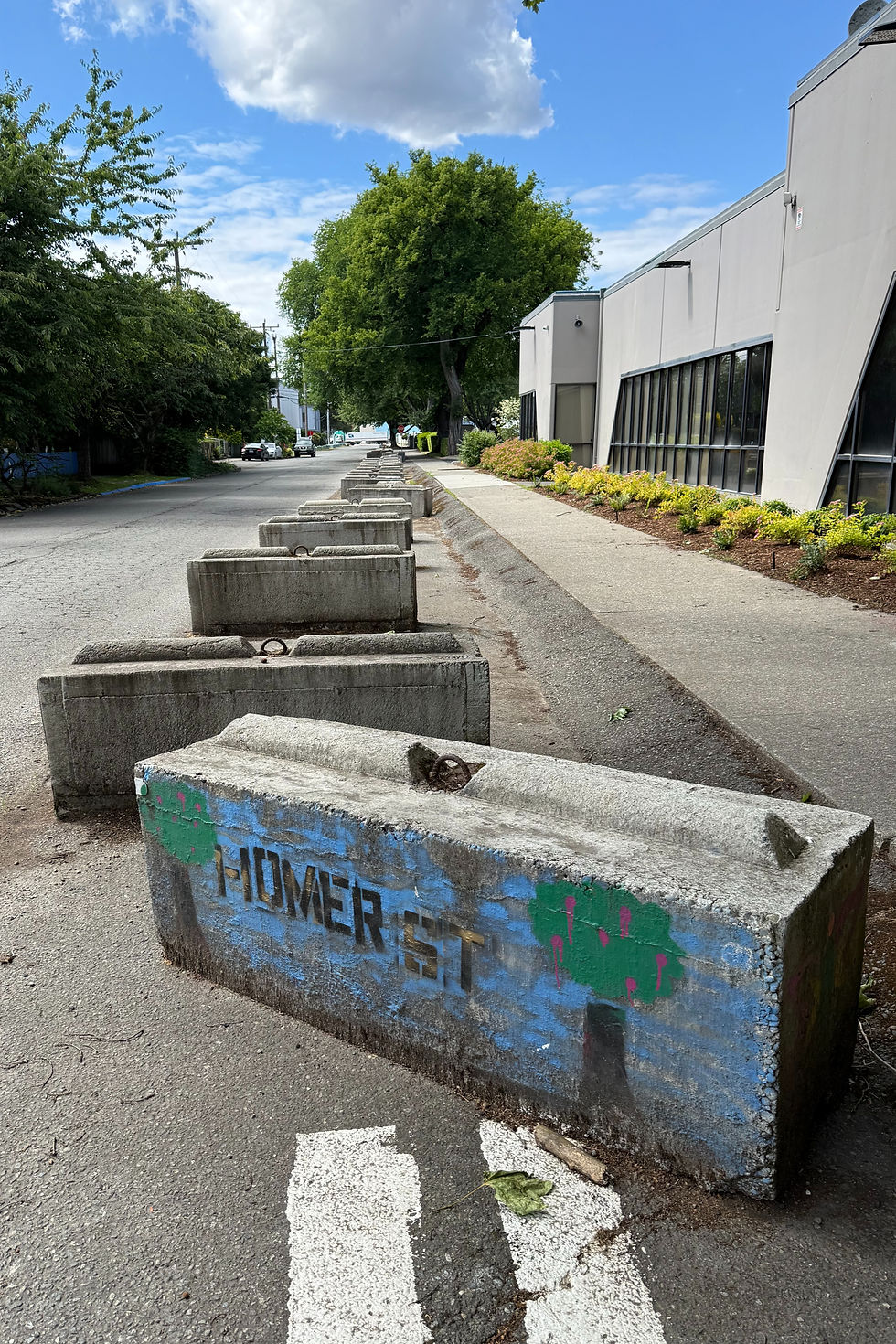
For years, several Georgetown streets have featured eco-blocks, the concrete blocks used as barriers. They get the "eco-" name because they are made from recycled concrete and are meant to be reused.
Several eco-blocks appeared on roadsides during the Covid-19 pandemic when the City of Seattle was not enforcing parking restrictions. RVs remained in place and sometimes established camps of unhoused people. The blocks, and sometimes boulders or other heavy containers, placed on roadsides blocked the RVs and other vehicles from parking on streets.
The origin of the eco-blocks was a mystery. And they still are. Now, UW graduate students have mapped the blocks and are trying to learn more about their origin story, according to a South Seattle Emerald story.


Ain't nobody gonna tell!